Natural Bedding · Buying Guide
How to Choose a Natural Mattress Layer for Your Sleep Style
A wool mattress topper can soften a bed, add a little cushioning, or change the feel of the surface without replacing the mattress. The right choice depends on what you want to improve—and on thickness, construction, fit, and care as much as the fiber itself.
Published October 24, 2026
A mattress is not always a finished decision. It may be sound and supportive yet feel too firm at the shoulders. It may be comfortable in one season and stuffy in another. Or it may simply need a softer surface without the cost and disruption of buying a new bed. A natural mattress layer offers a measured way to adjust the sleep setup, but it works best when chosen for a specific reason.
Wool is a compelling material for this purpose: it has a springy, insulating structure and can help manage moisture in the bedding system. Yet “wool topper” describes more than one kind of layer. Some are thin, flexible fleeces; others are quilted pads with wool batting inside a fabric shell. Their feel, upkeep, and effect on a mattress can differ substantially. Before comparing labels, decide what change you are trying to make.
Begin with the mattress you already have
A topper changes the first impression of a mattress, not its underlying support system. It can soften the contact surface and add cushioning, but it cannot reliably correct a sagging core, a broken foundation, or a mattress that no longer supports your body comfortably. If you can feel a pronounced dip or uneven area, adding a layer may disguise the problem briefly rather than solve it.
Start with a simple audit. Is the discomfort concentrated at pressure points, such as the shoulder or hip? Does the bed feel broadly too firm, or is it merely rough or uninviting at the surface? Do you wake warm or damp? Does the mattress itself move or sag? A topper is most useful when the issue is about surface comfort or the feel of the materials against you—not when the bed’s support is failing.
Give your current setup a few nights of attention before buying. Check whether a thick mattress protector, a tightly fitted sheet, or a heavy comforter is affecting the feel. If you share the bed, compare notes: one sleeper may want extra softness while the other likes the mattress as it is. Defining the problem clearly helps prevent a costly layer from becoming another item in the linen cupboard.
Choose thickness by the scale of the change
Thickness is an easy number to fixate on, but it is only a guide. A thinner topper generally makes a more restrained adjustment: it can add a soft, cushioned surface while keeping much of the mattress’s original character. A thicker or loftier construction may feel more noticeable under the body. The precise effect depends on the materials, how they are assembled, and how much they compress in use.
Think in terms of the change you want, rather than assuming that more depth means better comfort. If your mattress is already close to right, a modest layer may be enough. If the surface feels unyielding and you want a more substantial cushion, a thicker option could be worth considering. But a layer cannot promise to turn a very firm mattress into a plush one—or correct an unsuitable mattress for every sleeper.
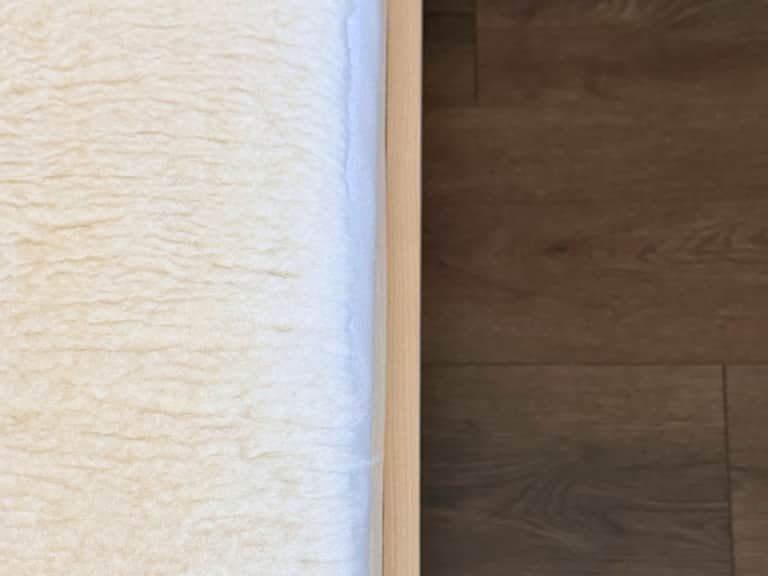
A roughly one-inch wool fleece, for example, is a relatively low-profile way to introduce a softer, warmer surface. The Happy Lamb Fleece is made with Premium Eco Wool woven into an organic cotton knit backing and is described as approximately one inch deep. Its flexible construction is distinct from a bulky, pillow-top-style topper. That makes it a useful example to consider when you want to understand how a thinner natural layer may differ from a deeper quilted one.
Remember that stated depth does not equal the final amount of cushioning you feel. A product may settle, compress, or change with use, and different construction methods distribute fill differently. Check whether a measurement refers to the item’s depth, batting, or overall loft. If the product information does not clarify this, ask the maker or seller before deciding.
Construction determines how wool feels
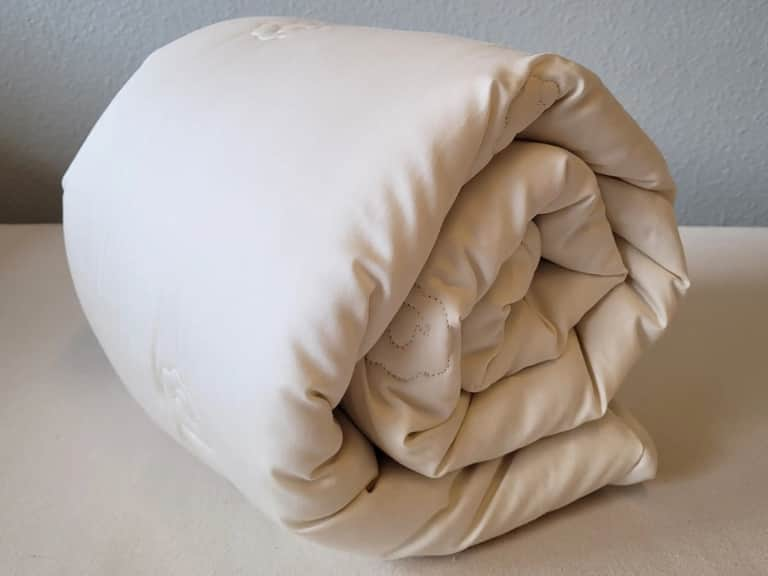
The word “wool” tells only part of the story. In a fleece-style topper, wool is worked into or attached to a backing. This tends to create a flexible layer whose surface has a woolly texture. A quilted topper, by contrast, typically encloses wool batting within a fabric shell and uses stitching or tufting to help keep the fill distributed. These constructions can feel different beneath the sheet and have different care requirements.
A fleece may suit someone seeking a simple, low-profile change and a tactile natural surface. A quilted layer may appeal to a sleeper who wants the wool contained within a smoother cover or prefers a more structured pad. Neither form is automatically superior. Consider how the layer will feel through your fitted sheet, whether you prefer a textured or smooth surface, and how much softness you want to add.
Look closely at the materials surrounding the wool, too. The cover or backing is in direct contact with the bedding system and can influence texture, breathability, durability, and cleaning. Organic cotton is one common natural-fiber choice, but terms such as “natural” and “organic” do not mean the same thing. If certification matters to you, verify which component is certified and what the certification covers. A claim about wool alone does not necessarily apply to every other part of the product.
Construction details matter after the first night as well. Stitching and quilting can help prevent fill from shifting, while elastic straps, corner bands, or a fitted design can help a layer stay in place. A flexible topper that slides around may interrupt sleep even if its surface feels good. Check the product dimensions against the mattress and confirm how the topper is secured before you buy.
Match the layer to your sleep style
Sleep position offers a useful starting point, not a prescription. Side sleepers often notice pressure around the shoulder and hip, so they may be looking for more cushioning at those contact points. A modest topper may soften the surface; someone seeking a much plusher feel may want to compare a loftier construction. The goal is comfort without losing the support that keeps the body feeling well aligned.
Back sleepers may want a subtler adjustment if their mattress already feels supportive. A thin wool layer can change the surface without introducing a dramatic shift in the bed’s overall feel. Stomach sleepers commonly prefer a firmer-feeling surface, so a thick, soft topper may not suit their preference. In each case, personal comfort and the mattress underneath matter more than a broad rule about what a position should require.
For combination sleepers, consider whether the layer makes it easy to change position. A very yielding surface can feel different when turning than a thinner, more responsive one. If you share a bed, take account of both sleepers’ preferences and the width of the mattress. A topper may soften the shared surface, but it cannot create different firmness zones unless it has been specifically designed to do so.
Temperature is another part of sleep style. Wool fibers are often valued for insulation and moisture management, but a wool layer is not a guarantee against overheating. The room, pajamas, sheets, mattress materials, comforter, and personal physiology all contribute to sleep temperature. If warmth is already an issue, consider the whole bedding arrangement rather than expecting a topper to solve it on its own.
Check the fit and how the topper stays put
A topper should correspond to the mattress dimensions, and its overall height can affect how neatly the fitted sheet sits. Measure the mattress, including any existing pad or protector, and compare those measurements with the topper’s specifications. If the mattress has unusual dimensions or a particularly deep profile, confirm that the sheet can accommodate the complete stack.
Then find out what holds the layer in position. Some designs rely on the weight and friction of the bedding; others use elastic corner straps or a fitted skirt. A flexible fleece can be arranged differently from a structured, quilted pad. If you move frequently during the night, or if the mattress surface is slippery, attachment details may matter almost as much as thickness.
Also think about how the topper interacts with your protector. A waterproof or padded protector placed above the topper can alter the sensation and may affect airflow. A protector beneath it may help shield the mattress while leaving the topper closer to the sleep surface. Follow the product’s instructions and avoid assuming that every combination will perform the same way.
Treat care instructions as part of the buying decision
Care can determine whether a natural bedding layer is practical for your household. Some wool toppers are not machine washable and call for spot cleaning and periodic airing. Others may permit limited washing under specific conditions. “Washable” does not necessarily mean suitable for a standard, full-agitation wash cycle: manufacturers may specify cold water, a soak and spin cycle, or particular drying methods.
The Happy Lamb Fleece, for instance, has a stated initial felting period of six to eight months, during which spot cleaning and sunning are recommended. After that break-in period, its care instructions allow cold machine washing using soak and spin only, with agitation to be avoided. That is a specific routine, not a general rule for wool bedding. Always follow the instructions for the particular item you own.
If a topper is intended to be spot-cleaned, consider where spills or stains are most likely to happen and whether a removable, washable protector can provide an extra barrier. Avoid washing, heating, or drying wool in ways the maker does not recommend: excessive agitation or heat can cause shrinkage, felting, or changes in loft. Airing outdoors may help refresh some products, but check the care guidance and keep the item away from harsh conditions.
Ask practical questions before purchase: Can the whole topper be cleaned, or only the surface? Does it need professional cleaning? How should it be dried? Is periodic airing recommended? What happens during the initial break-in period? A lower-maintenance layer may be a better match for someone who wants a straightforward routine, while a more involved care schedule may be acceptable to someone prioritizing a particular material or feel.
Understand natural-material claims clearly
Natural bedding appeals to people who want wool, cotton, or other fibers in place of certain synthetic materials. That preference can guide a decision, but it is useful to read labels precisely. Check the fill, cover or backing, dyes or finishes where disclosed, and sourcing details. If organic certification is important, look for an explicit certification statement and identify which materials it covers.
Be cautious about sweeping claims. Wool’s structure may contribute to insulation and moisture management, but that does not mean every wool topper will feel cool, prevent allergies, or improve sleep for every person. Sensitivities vary, and a fabric’s feel can be as important as its fiber content. If you know you react to wool or lanolin, review the product construction carefully and consult an appropriate health professional if you have concerns.
The same care applies to sustainability language. Traceability, organic certification, regional sourcing, and manufacturing information can help make a product easier to evaluate, but each claim has its own meaning. Seek concrete details rather than relying on a single broad label. A thoughtful purchase is not defined by a slogan; it is one whose materials, performance, and maintenance make sense for your needs.
A practical comparison checklist
Before choosing a wool mattress topper, compare the options using the same questions. This makes it easier to look past appealing descriptions and assess what will matter in everyday use.
- Purpose: Are you seeking a softer surface, added cushioning, a different texture, or a breathable natural-fiber layer?
- Mattress condition: Is the mattress still supportive and reasonably even, or is it sagging in a way a topper cannot repair?
- Thickness: Is the stated depth clear, and does it match the degree of change you want?
- Construction: Is the wool woven into a backing, quilted inside a shell, or secured by another method?
- Materials: What are the fill and cover made from, and are any certifications relevant to your priorities?
- Fit: Does it match your mattress size, and how will it stay in place?
- Care: Is cleaning limited to spot treatment, or does the maker permit a particular washing routine?
- Household needs: Will the layer work with your sheets, protector, climate, sleep preferences, and shared-bed arrangement?
Make a measured choice
The best mattress topper is not necessarily the thickest, the softest, or the one with the longest list of claims. It is the layer that makes a useful, proportionate change to a mattress that is otherwise working for you. For one sleeper, that may mean a low-profile fleece that adds a touch of softness. For another, it may mean a quilted topper with more substantial cushioning and a different care routine.
Take the mattress’s current condition, your sleep position, the desired amount of softness, and the construction details together. Then look at the practicalities: fit, attachment, fabric, certification, and cleaning. A few minutes spent reading those specifications can prevent the familiar disappointment of buying by a single headline feature.
Natural bedding is most useful when it serves everyday life rather than an abstract ideal. Choose a wool mattress topper for the change you actually want, understand what it can—and cannot—do, and make sure its upkeep fits your routine. A good layer should feel like a considered adjustment to the bed, not a replacement for the mattress beneath it.
Frequently asked questions
Will a wool mattress topper make a firm mattress feel soft?
It may soften the surface, depending on its thickness and construction, but it cannot guarantee a plush feel or change the mattress’s underlying support. If the mattress is sagging or structurally worn, a topper is unlikely to be a lasting solution.
Is a thicker wool topper always more comfortable?
No. Thickness changes the scale of the adjustment, but comfort also depends on fill, construction, mattress firmness, sleep position, and personal preference. Compare the stated depth and the way the topper is made rather than choosing by thickness alone.
Can wool toppers be machine washed?
Care varies by product. Some should only be spot-cleaned and aired; others allow limited machine washing under specific conditions. Check the maker’s instructions before cleaning, because agitation, heat, or unsuitable drying can damage wool.
What is the difference between a fleece and a quilted wool topper?
A fleece-style topper may have wool worked into a flexible backing, while a quilted version generally contains wool batting inside a fabric shell. The constructions can differ in surface feel, loft, how the fill is held in place, and care requirements.